A Breakthrough Wealth Special Presentation
The Y2Q Blackout
A classified intelligence leak, a Wall Street scramble, and a new executive order...
have just exposed the invisible hardware
at the center of a secret war for $100 trillion.
REVEALED: Exactly how investors could turn a rare,
ignored $20 “chokepoint" into a 1,000%+ windfall
as this federally mandated infrastructure upgrade unfolds.
Dear Friend,
I want you to imagine a vault.
Inside is everything that keeps the modern world running.
The password to your bank account.
The balance of everything you have saved for retirement.
The source code and trade secrets of the entire Fortune 500.
The launch coordinates of every U.S. nuclear submarine running beneath the Pacific.
And the cryptographic keys behind the trillions of dollars that move across the global financial system every afternoon.
Right now, it’s all protected by a single mathematical lock.
It’s called RSA encryption — the gold standard of the digital age.
In 1977, three MIT mathematicians set out to build a lock no computer could ever crack — and to prove it, one of them spent his days trying to smash the very thing the other two had built.
The code that finally defeated him became RSA: the invisible fortress that still guards nearly every secret on Earth.
Every time data moves — a login, a payment, a text — RSA scrambles it into gibberish that only the right key can unlock.
I’ll explain exactly how RSA works in a moment.
But for now, understand this: RSA is the electric fence around your money, your identity, and your country.
For decades, we were told that lock could never be broken.
That the most powerful supercomputer ever built would need 300 trillion years to guess the combination.
We felt safe.
We moved the entire world behind that lock and assumed it would hold forever.
But behind closed doors, our adversaries stopped trying to guess the combination.
They are simply stealing the vault.
It is a strategy U.S. intelligence agencies call “Harvest Now, Decrypt Later.”
HARVEST
China & Russia vacuum encrypted data today
STOCKPILE
Stored in state-run server farms in Beijing & Moscow
DECRYPT
Quantum computer breaks RSA, all data exposed
Every secret they've stolen gets unlocked the moment Q-Day arrives.
Right now, the cyber-warfare divisions of China and Russia are vacuuming up the world’s most sensitive encrypted data — financial records, corporate secrets, military communications — and hauling it back to state-run server farms in Beijing and Moscow.
They cannot read a word of it, yet.
They are stockpiling it — for a single day on the calendar.
The day the intelligence community calls “Q-Day.”
The day a full-scale quantum computer is finally switched on.
And when that day comes, the lock protecting America’s banking systems and military does not just break.
It evaporates.
Here’s why:
A classical supercomputer can only attack that lock the long way — grinding through calculations that grow in length and complexity the larger the number gets.
There are billions of these combinations.
A quantum computer does not work that way.
It attacks every single combination at once and produces an answer.
Meaning that what would take an $18 billion supercomputer, like Elon Musk’s Colossus I, 300 trillion years to crack…
A quantum computer could crack in an afternoon.
300 Trillion Years
Time for the world's most powerful supercomputer to crack RSA
One Afternoon
Time for a quantum computer to do the same
The lock protecting your money has an expiration date.
And the moment that happens, whoever owns the machine holds the master key to the modern world.
Every stockpiled military secret.
Every corporate patent.
Every bank ledger.
Everything gets laid bare instantly.
An adversary could simply log into the Federal Reserve, rewrite the ledgers, and zero out the wealth of the nation between lunch and dinner.
For forty years, Wall Street waved this away as science fiction.
As you’re about to see, this is no longer the case.
The Pentagon is not waving it away.
The National Security Agency is not waving it away.
And neither is the smartest money on Wall Street, which has quietly started moving real capital to get in front of it.
There is now a name for the countdown they are all racing against.
The security world calls it Y2Q — “Years to Quantum.”
For years, the experts filed Q-Day under 2040, safely over the horizon.
Then the classified breakthroughs started landing, and the estimates collapsed.
The most serious people in the room now warn that a quantum computer capable of breaking global encryption could arrive before the end of this decade.
As Citi’s research team put it in a recent report on the quantum threat:
 Q-Day Warning
From a risk perspective, Q-Day is no longer a future event. It is already here.
And for the small group of investors who understand how to read a moment like this one, this is not only a story about national security.
It is the setup for one of the largest wealth-creation events of our lifetime.
Because all of this is about to run through a single company… a single chokepoint that produces a technology nobody else can supply.
That company is real.
It is American.
It trades for around $20 a share, with almost no one watching.
And if you needed any more proof of how urgent this is…
On June 22nd, 2026, in the Oval Office — flanked by the president of Google and the CEO of IBM — President Trump signed two executive orders on quantum.
June 22, 2026 — The Oval Office
Executive Order #1
Build America’s sovereign quantum computer by 2028
Executive Order #2
Accelerate the tear-out of vulnerable encryption government-wide by 2031
Signed by the President. Flanked by the CEOs of Google and IBM.
The first launches a national effort to build America's own sovereign quantum computer by 2028, on U.S. soil.
The second sets a hard, accelerated deadline to tear the nation's vulnerable encryption out and replace it before a hostile machine can break it.
The President of the United States just put the full force of the federal government behind this initiative, and behind the exact hardware this $20 company builds.
This is no longer a forecast.
It is signed federal policy – recognized at the highest levels of urgency on Capitol Hill.
In my three decades on Wall Street, I have seen exactly what happens when the U.S. government faces a national threat and forces the private sector to fill its needs.
When a sweeping federal mandate drops, the bottleneck suppliers that hold the patents and operate the foundries…
They are the ones that routinely hand early investors 1,000%, 3,000%, and even 11,000% gains.
And as we speak, driven entirely by the Y2Q panic…
The largest federally mandated hardware upgrade in United States history is quietly unfolding…
And the capital flows all trace back to a single, completely ignored $20 stock.
Who I Am
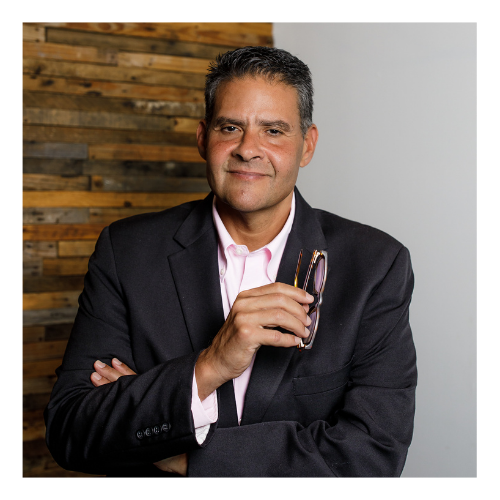
My name is Dylan Jovine.
I’m the founder of Behind the Markets, an elite investment research firm.
And for three decades, as a former Wall Street investment banker, I focused on one thing:
I don’t buy the giant, multi-trillion-dollar companies everyone is talking about on CNBC.
I do not buy the headline stock featured on the cover of The Wall Street Journal.
When a huge megatrend hits…
From the Internet age to the AI revolution…
I trace the supply chain underneath it, and I find the invisible chokepoint everyone else is forced to buy from.
When the personal computer took over the world, the largest fortunes weren’t made by guessing which plastic box would sell best.
They were made by owning the software operating system… like Microsoft, which surged 550,000% since inception.
Or the silicon supplier, like Intel, that every computer maker was forced to license.
It subsequently handed investors 600,000% since its IPO.
When the artificial intelligence boom hit, the story was exactly the same.
While amateur investors threw their money at dozens of different AI software startups, hoping to get lucky and pick the next ChatGPT…
My readers were shown a completely different path.
Every AI chip, every data center, every “revolutionary” generative AI system kept tracing back to one invisible foundational layer.
A company that manufactures almost nothing itself, yet collects a licensing royalty on nearly every advanced processor on Earth.
I recommended that company, to my readers at $139.82.
Since then, it has traded as high as $427—more than tripling their money while the rest of the market guessed on software.
And that’s one of several “alternative” AI calls I’ve made, from energy to defense to biotech.
When you find the mandatory supplier before the institutional crowd arrives, the returns aren’t just market-beating.
They are life-altering.
But I didn't become successful overnight.
I grew up poor.
No trust fund.
No connections.
When I tried to break into Wall Street in my twenties, not one of the big “white-shoe” firms would touch me.
I didn't fit the mold.
So I outworked them.
I read more, dug deeper, and hunted the angles the guys in custom suits were too lazy to chase.
By 24, I'd become one of the youngest people in American history to launch a registered broker-dealer...
Our offices at 100 Wall Street were just a ten-minute walk from the floor of the New York Stock Exchange.

Before I was 30, more than $1 billion had passed through my hands. A dirt-poor kid from Queens — making markets in the same arena as Goldman Sachs.
Today, more than 500,000 investors across 28 countries read my research at Behind the Markets.
Not because I got lucky. Because I learned to see the pattern before the crowd.
Three times in 30 years, I've watched the same thing happen. The data converges on a conclusion the crowd isn't willing to reach. And the investors who act before the news breaks capture gains that change their lives.
For example, in 2006, the data told me the housing market was a house of cards.
I warned my readers a full year before the crash — before $17 trillion in household wealth evaporated.
“The market has no place else to go but down. It's not a question of 'if' it's a question of 'when.'”
Dylan Jovine
June 9, 2006
But I’m no permabear...
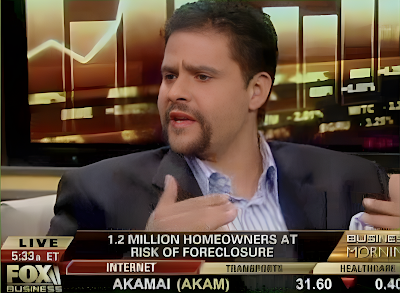
When the market bottomed out in 2009 I went on Fox Business and announced:
The stock market at 6,500 is like walking into a dealership when everything is marked half off.
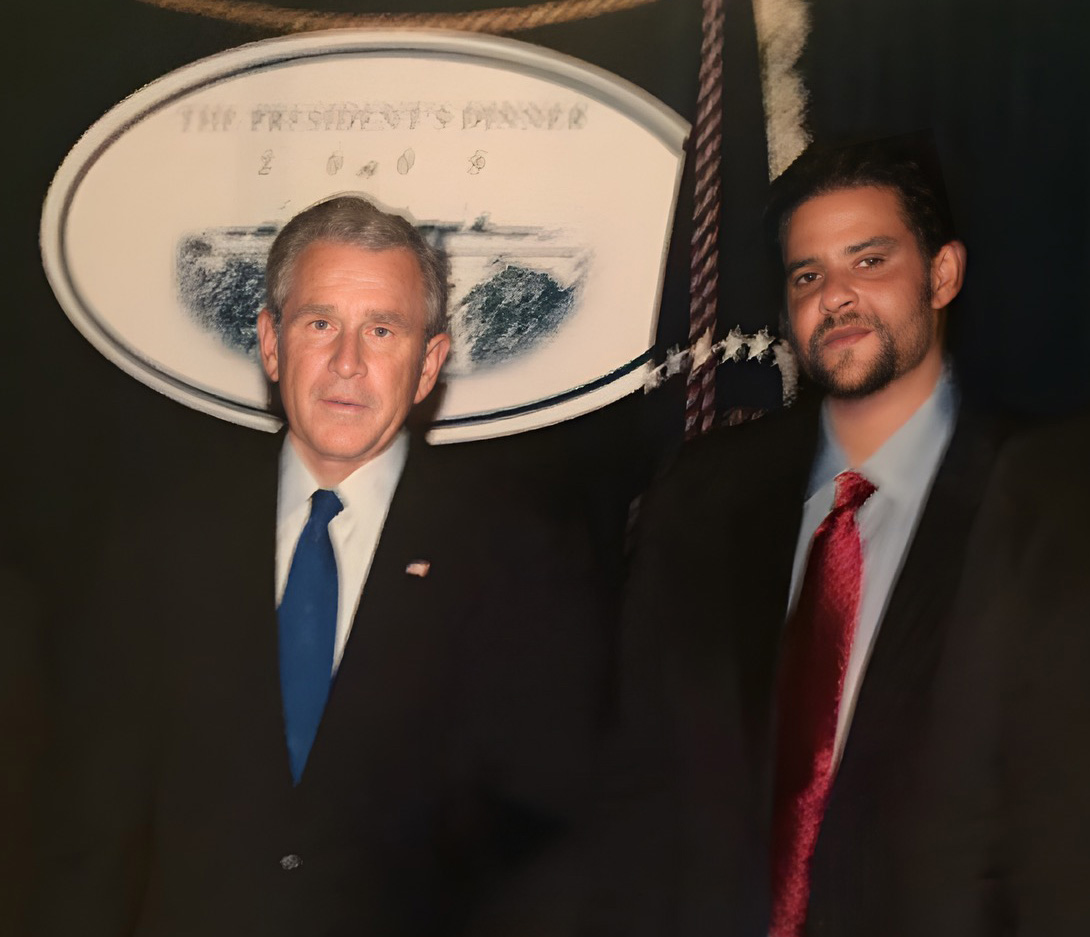
Throughout my career, I’ve built connections with some of the most powerful insiders on Wall Street and Capitol Hill.
I’ve had a chance to meet former President George W. Bush Jr…
In 2020, I predicted the COVID market reversal exactly eleven days before the S&P 500 bottomed.
“FACT: When we get to the other side of this, the market will have a 'SNAP-BACK' rally because prices and interest rates are so cheap.”
Dylan Jovine
March 12, 2020
I also predicted the world was about to enter a “new cycle of war” – seven months before Russia invaded Ukraine…
“The world is entering a new cycle of war. Russia and China are trying to flip the international script just like Germany did in 1914.”
Dylan Jovine
July 15, 2021
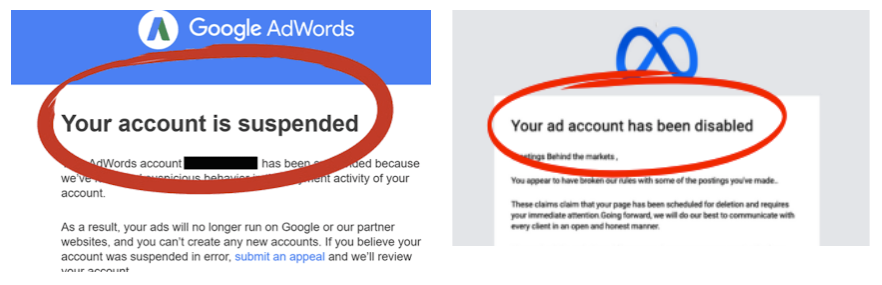
Google and Facebook suspended my accounts for the things I was saying.
The Chinese Communist Party sent a woman to talk to me when I started warning that China would invade Taiwan.

And this year, I've sat down with Brett Guthrie — Chairman of the oldest and most powerful committee in Congress.
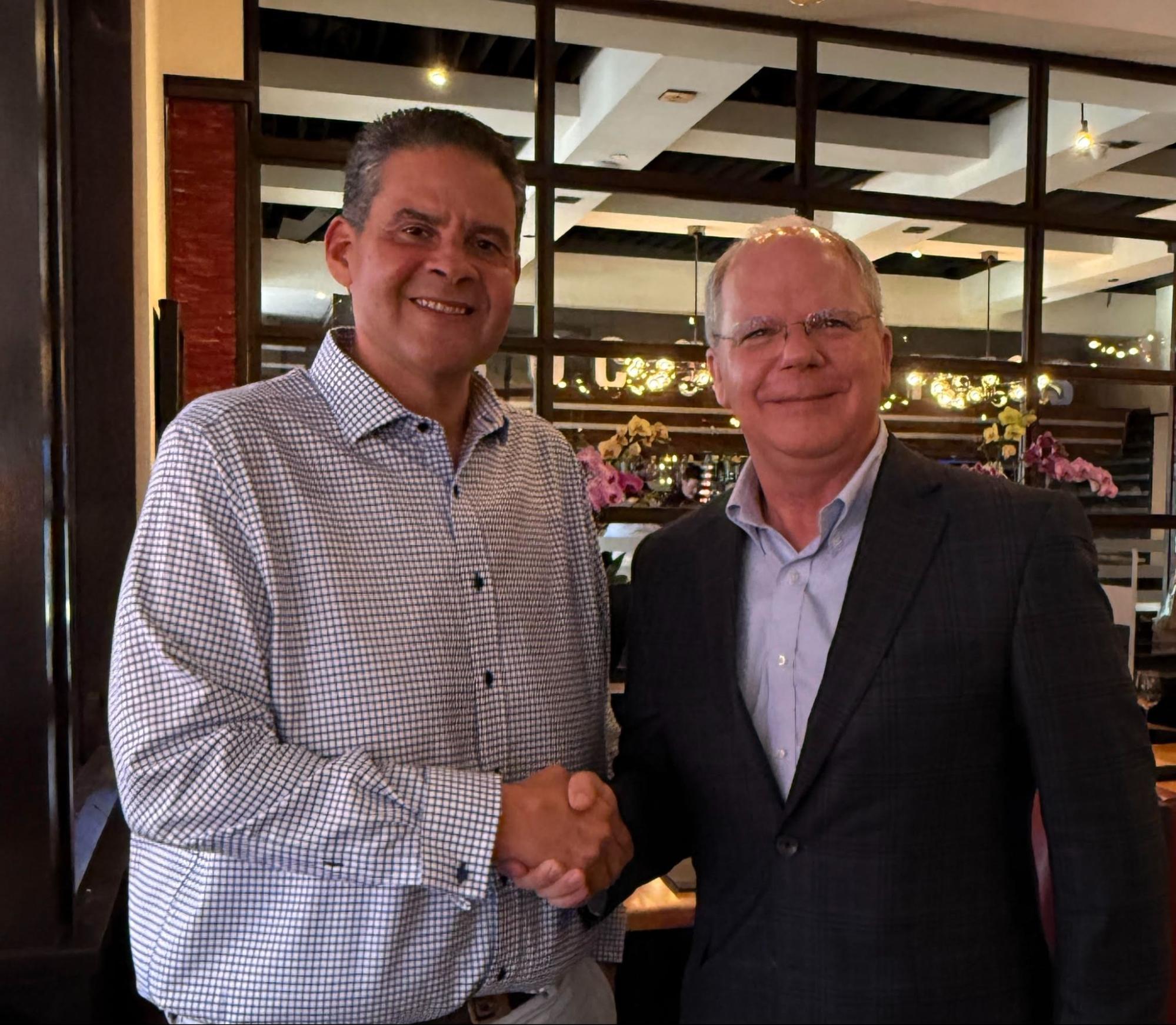
I've also recently met with Bill Huizenga…
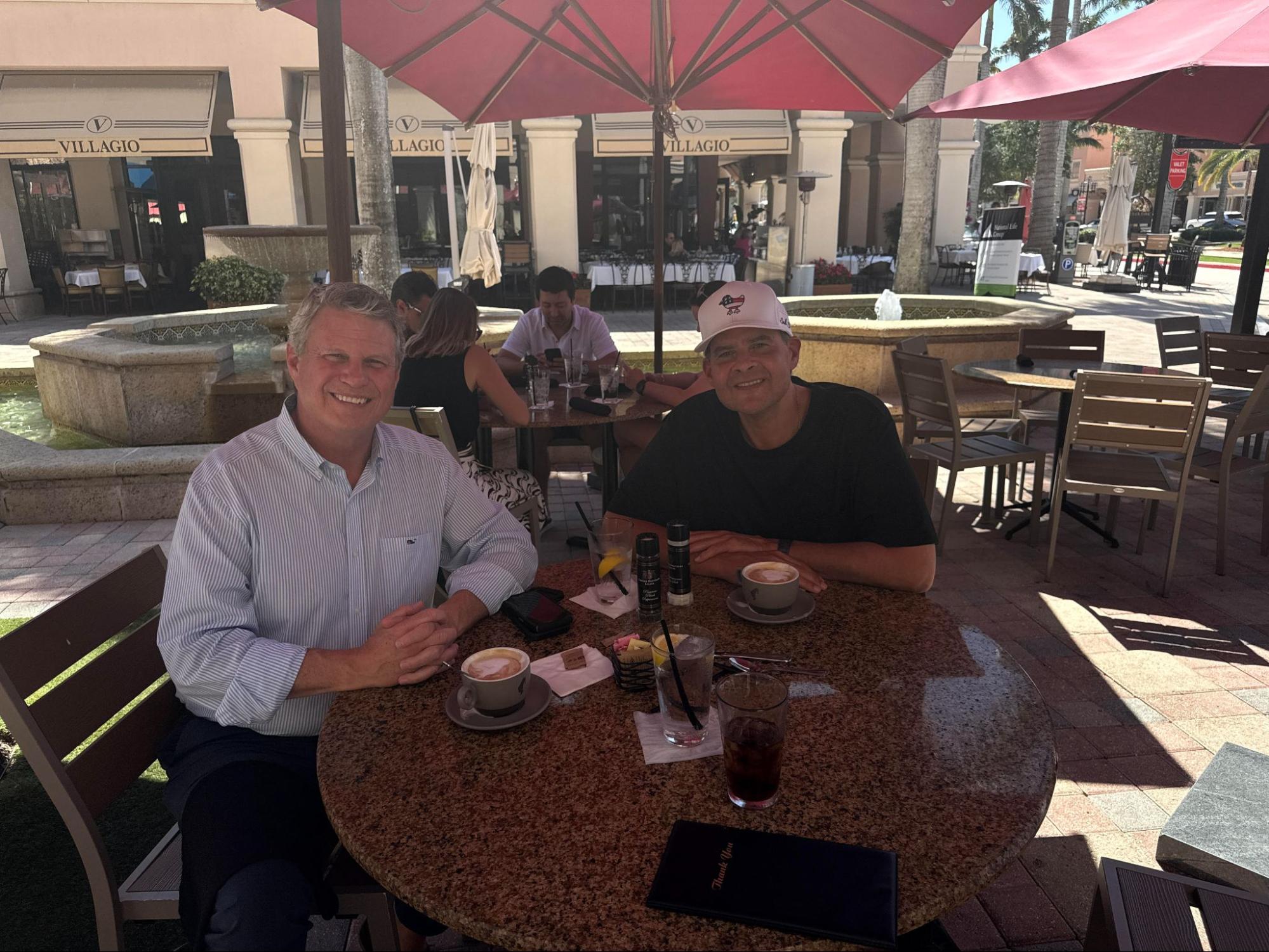
Vice-Chairman of the committee that oversees the Federal Reserve and the Treasury, who also sits on Foreign Affairs, the committee with jurisdiction over where America deploys its armed forces.
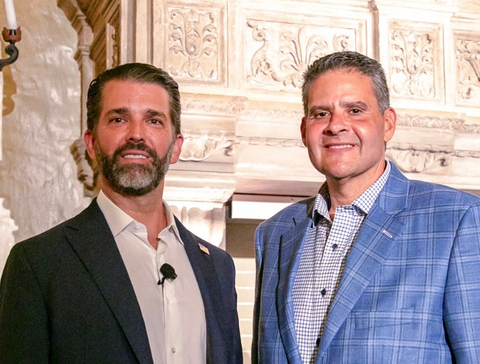
That's me on the right. And yes — that's Donald Trump Jr.
We recently met at a private dinner last October at The Breakers in Palm Beach, a stone's throw from Mar-a-Lago.
No press.
Just a small group of Wall Street heavyweights, a few eight-figure investors, and the son of the President of the United States.
I was there for hours. I won't tell you everything we discussed — but that night is what set me on this mission.
And it's not the first time I've stood next to the people who actually move things.
I don't show you these to brag.
I show you because access is information.
Look at the documented track record this exact chokepoint method has produced:
When AI data centers began triggering a global electricity crisis, I didn’t recommend the tech giants building the centers.
I recommended the hidden nuclear utility supplier powering them, Talen Energy, at $207 a share.
It has since traded as high as $451 — more than double.
When quantum computing was still a punchline to the mainstream media, I traced the patents and put my readers into IonQ at $8.11.
It has since traded as high as $84 — more than ten times the price I recommended it at.
A $5,000 investment would have grown into over $51,000.
I recognized the defense sector’s desperate need for secure AI data integration early, recommending Palantir at $7.38.
It has since traded as high as $207—28-times higher.
That is enough to turn a $5,000 stake into a $140,000 windfall.
Instead of chasing the server makers, I looked at the high-bandwidth memory chips that physically feed data to every AI server on Earth.
I recommended the critical supplier Micron at $54.37.
It has since traded as high as $1,110 — more than twenty times higher.
That single recommendation alone could have transformed a $5,000 stake into over $100,000.
I saw the technological shift in law enforcement and recommended Axon, the hardware platform now fundamentally reshaping global public safety, at roughly $28.
It has since traded as high as $886 — more than thirty times higher.
That transforms $5,000 into a staggering $158,000.
And when the commercial space race reignited with orbital security deployments, I didn’t tell my readers to wait for giant, bloated defense primes.
I recommended the vital space-infrastructure supplier Rocket Lab at $3.80 a share.
It recently topped $151 — nearly forty times the price I recommended it at.
Think about the math on that for a second. If you had recognized that infrastructure chokepoint early, a simple $5,000 investment would have exploded into nearly $200,000 in cash.
Those are not cherry-picked trades designed to look good on a marketing brochure. They are real trade recommendations I published to my readers.
While we didn’t ride each one to its exact peak, just look at what my readers have had to say:
“Thanks so much, I am a real Dylan Jovine believer. I made so much money on BEAM it was crazy.”
J. Allen
“Amazing!!! Have used your service since October 2019. As of this morning, up big time on 2 stocks. Best & most professional service ever!!!”
Rod G.
“That was the fastest money I have ever made in my life. You recommended Loxo Friday morning and it was taken over Monday. Wow.”
Scott S.
All told, over the last few years, three of the companies I’ve recommended have gone on to achieve valuations greater than $1 trillion while we actively held them.
Across 97 closed recommendations, my published record is a 71% win rate, averaging better than 42% per trade.
But I believe we are on the cusp of the single most lucrative event of my career.
Today, Y2Q’s damning threat to the U.S. banking system and the military grid is driving the most aggressive capital deployment in human history.
The U.S. government, the Pentagon, and the Fortune 500 are mobilizing trillions of dollars.
And it is entirely dependent on the one piece of physical hardware none of the Magnificent 7 can build.
In the next few minutes, I am going to show you the physical limitations of classical AI chips, and why a small investment in one specific, little-known American company could produce one of the decade’s greatest windfalls.
I’m talking about the equivalent of going back to 2016 and buying Nvidia before anyone woke up to what their technology was capable of, the way I see it.
I will show you exactly how to get the name and ticker symbol of the company leading the race to protect $100 trillion in digital wealth…
A stock I believe has the potential to roar 1,000%... 3,000%... even 11,000% over the next 12 to 24 months...
By becoming the critical linchpin in the USA’s mission to dominate quantum computing...
Based on an urgent federal deadline I’ll tell you about shortly.
The $100 Trillion Cyber Pearl Harbor
To understand exactly how explosive this $20 stock could be, and why the smartest institutional money on Earth is quietly hoarding shares right now...
You need to understand the true magnitude of the cyber-war currently being fought in the shadows....
I had lunch with Congressman Bill Huizenga recently — Chairman of the House Foreign Affairs Subcommittee on South and Central Asia.
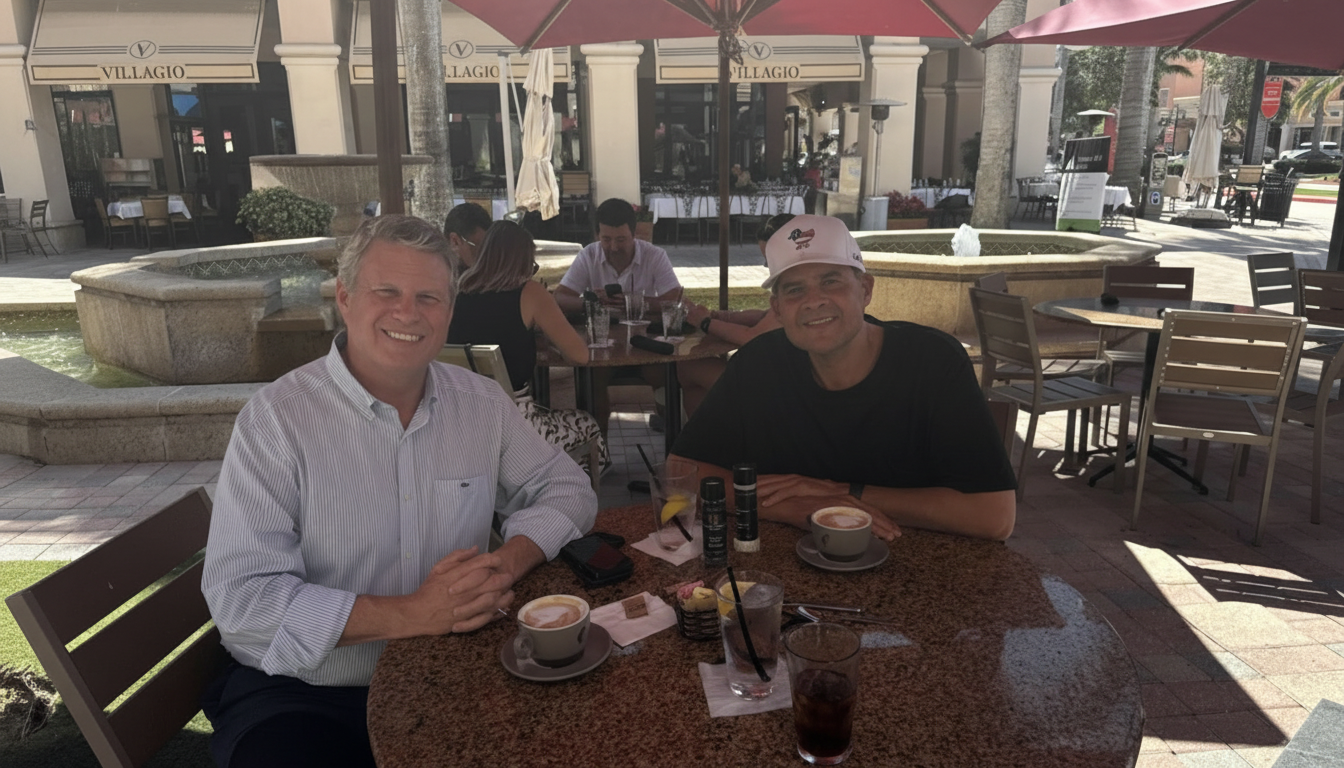
And I came away with one clear understanding:
China isn’t hiding their ambition.
They view quantum computing not merely as a scientific endeavor, but as a weapon of mass economic destruction.
Under the direct orders of President Xi Jinping, the Chinese government has initiated a digital Manhattan Project.
China is currently outspending the United States government and the rest of the world’s public quantum research initiatives combined.
They have built sprawling national laboratories in cities like Hefei dedicated solely to dominating the quantum landscape and breaking Western encryption.
Their singular goal is to reach Y2Q first.
To cross the quantum finish line, achieve “Quantum Supremacy,” and hold the American financial system and power grid hostage.
And the terrifying truth is, they are already inside the gates.
If you think this is fear-mongering, you need to look at the official testimonies being logged in Washington, D.C., right now.
On January 31, 2024, FBI Director Christopher Wray sat before the House Select Committee on the Strategic Competition Between the United States and the Chinese Communist Party.
He delivered a chilling public warning.
He confirmed that a sophisticated Chinese state-sponsored hacking group — operating under the alias "Volt Typhoon" — had quietly infiltrated America's water treatment facilities, transportation systems, and critical energy grids.
Director Wray did not mince words. He stated under oath:
“There has been far too little public focus on the fact that PRC [People's Republic of China] hackers are targeting our critical infrastructure — our water treatment plants, our electrical grid, our oil and natural gas pipelines, our transportation systems. And the risk that poses to every American requires our attention now.”
Christopher Wray
FBI Director

He further warned lawmakers that these hackers...
“are positioning on American infrastructure in preparation to wreak havoc and cause real-world harm to American citizens and communities, if or when China decides the time has come to strike.”
Christopher Wray
FBI Director
He explicitly stated that China's hacking program is larger than that of every other major nation combined...
And that their cyber operatives outnumber FBI cyber personnel by at least 50 to 1.
These hackers bypassed classic firewalls.
They embedded themselves in obsolete routers and edge networks.
They maintained undetected access inside some of our most critical infrastructure for at least five years.
Their goal was not noisy ransomware. It was not a smash-and-grab theft.
It was something far more patient — and far more insidious: to bury themselves inside the machinery that runs America — the power, the water, the pipelines — and wait.
Pre-positioned to plunge the nation into darkness the moment Beijing gives the word.
And Volt Typhoon was only the campaign built to break things.
A second operation — code-named "Salt Typhoon" — was built to listen.
It burrowed into the backbone of America's phone networks — at least nine major carriers, including giants like AT&T and Verizon — and siphoned off the call records and location data of more than a million Americans.
It recorded the private calls of senior U.S. officials.
And in the most disturbing breach of all...
It broke into the court-ordered wiretap systems themselves and walked away with a near-complete list of the phone numbers U.S. law enforcement was monitoring... handing Beijing a roadmap to the very spies America had identified.
One U.S. senator called it the worst telecom hack in our nation's history.
By the FBI's count, it would go on to compromise more than 200 companies across 80 countries.
That is what China can already do to the data that isn't encrypted.
The encrypted data — the bank wires, the state secrets, the military traffic — they are vacuuming up too.
They simply can't read it yet.
They are stockpiling it for the one moment their quantum machines come online — and the lock falls away.
But spying on phone calls and darkening cities is still only half of China's target.
The real prize is the U.S. dollar and the global financial order.
A recent, highly circulated risk-assessment report co-authored by the Quantum Alliance Initiative at the Hudson Institute and the Citi Global Perspectives & Solutions institute... laid out the stark economic reality of this threat.
They analyzed exactly what would happen if a foreign adversary used a quantum computer to breach the U.S. Federal Reserve’s Fedwire system or the global SWIFT banking network.
The global financial system operates entirely on trust and instant cryptographic verification.
The SWIFT network alone securely messages over 40 million financial transactions a day, settling trillions of dollars annually.
The U.S. Federal Reserve’s Fedwire system processes an average of $4.5 trillion every single business day.
Every single one of these transfers relies on classical RSA encryption to verify the sender, authenticate the receiver, and secure the funds.
Here’s how RSA works, in simple terms:
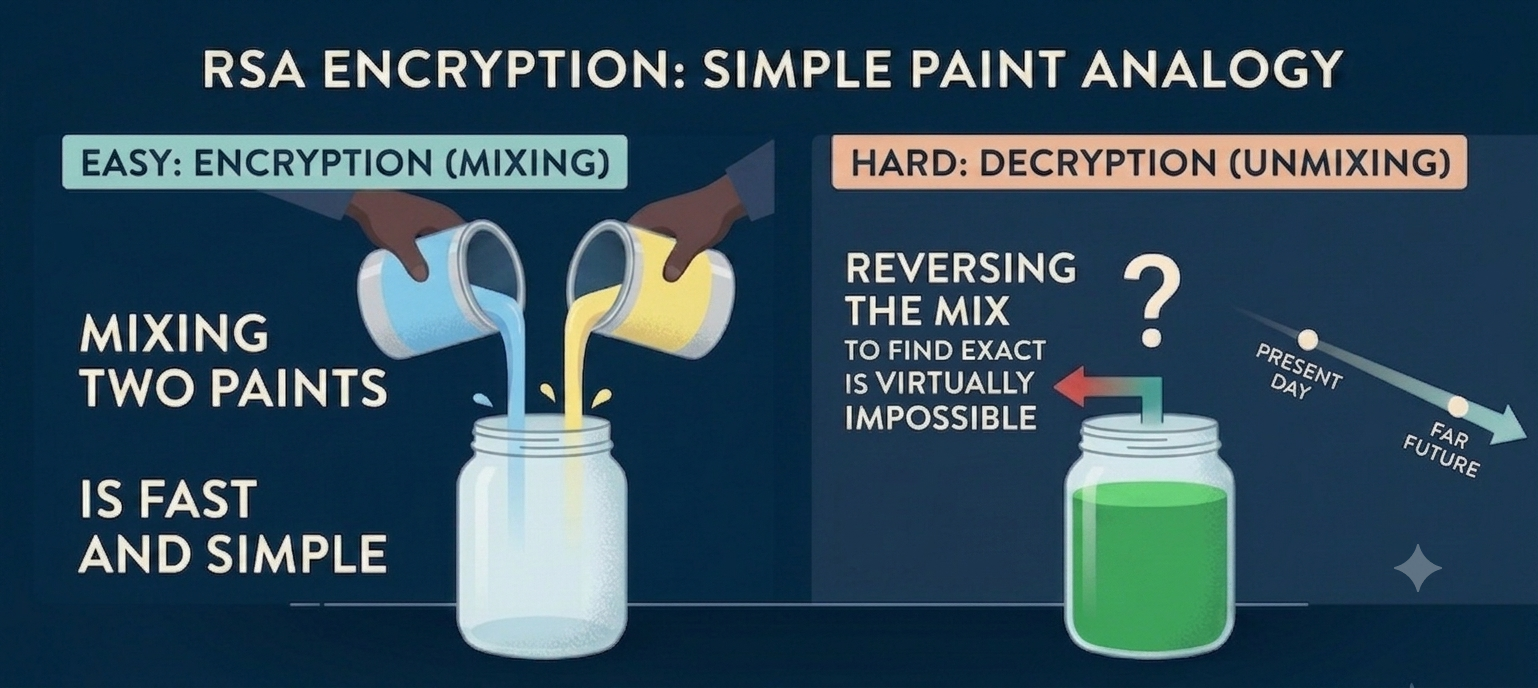
Picture mixing two shades of paint into a new color.
Easy — anyone can do it in seconds.
Now try to reverse it: look at that final color and name the two precise shades that made it.
There are tens of millions of discernible colors and over 100 million shades and variations of each.
You could work for a lifetime and never get there.
That's the lock protecting your money.
The two secret shades are two enormous prime numbers – the blended color is the public key the whole world can see.
And "un-mixing" it — pulling those primes back out — is so hard that a normal computer would grind away longer than the universe has existed to figure it out.
A quantum computer is the first machine that can un-mix the paint.
And the moment it can, every lock built this way springs open at once.
If an adversary with a functioning quantum computer cracks the RSA encryption protecting those specific networks, it would not just cause a market dip.
It would crash the global economy in a matter of hours.
They could rewrite bank balances.
They could zero out the 401(k) accounts of millions of Americans.
They could siphon trillions of dollars in U.S. Treasury bonds and transfer them to untraceable offshore ledgers before a human operator even realizes a breach has occurred.
The provenance of every stock trade and institutional transfer would instantly become untrustworthy.
The ensuing panic would trigger a global bank run that would make the 1929 stock market crash and the 2008 financial crisis look like minor corrections.
The researchers estimated that a single successful quantum cyberattack on the Fedwire system could crash U.S. GDP 10% to 17%.
That equates to an instant $2 Trillion to $3.3 Trillion loss.
Confidence in the U.S. Dollar as the global reserve currency would evaporate overnight.
That $2 to $3.3 trillion is only the opening shock.
Behind that mathematical lock sits the connective tissue of the entire global economy —
Bank balances, retirement accounts, Treasuries, corporate secrets, and cross-border settlements — a pool of digital and financial value running into the tens of trillions of dollars.
Put all of it at risk at once, and you have what security strategists call a $100 trillion Cyber Pearl Harbor.
$100 TRILLION
Digital & financial assets at risk on Q-Day
Banking systems · Military secrets · Retirement accounts · Corporate IP
Quantum Alliance Initiative / Citi Global Perspectives
Now, before you go and stuff your life’s savings under your mattress, there is hope.
I found it in an American company trading for $20 a share…
Capable of manufacturing the technology needed to fight back…
And there’s no doubt in my mind we may soon see this stock rip skyward - anywhere from 1,000% to 11,000%.
Here’s why….
Jamie Dimon’s Warning and Wall Street’s Private Quantum Army
The United States government knows this threat is real.
The Pentagon and the intelligence community are already mobilizing – as Trump’s two executive orders signed June 22nd proved.
But the smartest money on Wall Street is in action, too.

Look at Jamie Dimon, the Chairman and Chief Executive Officer of JPMorgan Chase.
He commands the largest, most systemically important bank in the United States.
One of the most important in the world.
He sits at the absolute epicenter of the global capitalist system.
With unparalleled access to the highest levels of federal intelligence, regularly meeting with Pentagon officials, the Treasury Secretary, and foreign heads of state.
And Jamie Dimon isn’t sitting on the sidelines.
For years, Dimon has explicitly named cyber-warfare as the biggest risk to the U.S. financial system in his annual letters to shareholders.
But he’s no longer just talking about classical phishing scams or localized ransomware.
He is talking about the Y2Q extinction event.
In his shareholder letters, Dimon has pointed to quantum computing as a critical, paradigm-shifting technology the bank must master, and the need to prepare for adversaries armed with quantum algorithms.
Behind the scenes, JPMorgan Chase hasn’t just been hiring traditional investment bankers and algorithmic quants.
They have been aggressively building a private, elite army of quantum physicists, cryptographers, and applied researchers.
They appointed Dr. Marco Pistoia — a legendary quantum researcher who spent over two decades at IBM — to serve as the Head of Global Technology Applied Research.
Under his command, JPMorgan’s quantum division has been frantically running simulations and publishing peer-reviewed papers on Quantum Key Distribution (QKD) and post-quantum cryptography algorithms.
These are the two defensive technologies being pioneered to protect data once quantum computers crack RSA.
And they have moved far beyond theoretical white papers.
In 2022, JPMorgan Chase actively partnered with Toshiba and Ciena to build and demonstrate a first-of-its-kind, physical Quantum Key Distribution network.
They successfully secured a mission-critical blockchain application against a simulated quantum attack.
They are actively running real time “war games” to armor their balance sheet before Q-Day arrives.
And they’re not alone.
Goldman Sachs has partnered with quantum software firms to research algorithms for financial derivatives.
HSBC recently joined the BT Group to test quantum-secure transmissions over commercial fiber-optic networks in London.
Wells Fargo has quietly launched well-funded internal quantum defense initiatives.
The Fortune 500 is waking up to the Y2Q countdown.
And they are preparing to throw any amount of money needed at the problem.
But the banks cannot win this war alone — and that is the part Wall Street will not say out loud.
A bank is a software and capital machine.
It can hire the world’s best cryptographers to write quantum-resistant code.
What it cannot do is manufacture the physical quantum hardware the next era of secure computing will be built on.
No bank fabricates a quantum chip.
But one company – the company I’m telling you about today – does.
And they do it right here in the United States.
Every dollar JPMorgan, Goldman, and the rest pour into quantum defense is a signal that the threat has stopped being theoretical and started being budgeted for.
But the banks are not the buyer that matters most.
The government is.
Because the United States is in a race it cannot afford to lose.
Whoever builds a cryptographically capable quantum computer first — Washington or Beijing — holds the master key to the other side’s vault.
China is pouring state fortunes into closing the gap.
And the American intelligence community understands the stakes plainly: the nation that controls quantum hardware controls the next century of secrets.
This is not my framing.
It is the government’s own.
When the Commerce Department launched its push to fund American quantum computing this year, it said in plain language that the technology carries:
Significant implications for national defense
And it backed those words with money.
Washington signed a letter of intent to direct up to $100 million in federal funding to a single American quantum-chip maker — and, as a condition of that award, to take an equity stake in the company itself.
Not an ordinary research grant.
An ownership position in the company’s future.
The government does not write terms like that for a business it considers optional.
The government has a long history of backing the companies it deems strategically vital --- long before the rest of the world catches on.
One of the first companies the CIA's own venture arm ever backed was Palantir.
The same Palantir I recommended to my readers at $7.38 – which has since roared more than 2,800% – becoming more valuable than defense giants like Lockheed Martin and Northrop Grumman.
And this company, right now, occupies a much more critical strategic position than Palantir.
The same company has already been pulled onto the defensive side of this war: the U.S. Air Force Research Laboratory is paying it, under a multi-year contract, to build the secure quantum networks the Pentagon will need on the far side of Q-Day.
(More on exactly what that contract is for in a moment.)
Compute capability for the offense.
Secure networks for the defense.
Both run through physical quantum hardware.
And almost no one on Earth can build it.
Because here is the bottleneck the whole race runs through:
In the entire universe of publicly traded companies, only one designs, fabricates, and ships its own quantum processors, from its own factory, on American soil.
Whoever needs sovereign quantum hardware — the U.S. government, the Pentagon, an allied nation — has exactly one public doorway to walk through.
And it still trades for around $20 a share.
The 11,000% “Supplier Law”
In the history of the stock market, when the U.S. government and the world’s largest corporations are forced to buy a new, patented technology to survive…
The hidden, mandated supplier always hands early investors the biggest windfalls.
I call it the “Supplier Law”:
When the mobile phone revolution began in the late 1990s, the amateur retail crowd bought handset makers — giant companies like Motorola or Nokia.
They made a modest profit.
But the institutional smart money bought Qualcomm, the supplier that held the core CDMA network patents that every single cell phone maker was legally forced to use to connect to the grid.
Qualcomm became the best-performing stock in the S&P 500.
It delivered a record-breaking 2,619% gain in the year 1999 alone.
$5,000 turned into over $135,000 in a matter of months.
When the enterprise shift to cloud computing occurred over the last decade, corporations were forced to secure their data under new government and industry mandates.
You didn’t get rich buying the giant cloud hosts or the banks upgrading their networks.
You got rich buying the pure-play security hardware suppliers like Fortinet, which skyrocketed an unbelievable 8,400%.
That is enough to transform a $5,000 investment into a life-changing $420,000 windfall.
And we saw this exact same phenomenon play out during the recent artificial intelligence boom.
While the financial media hyped up tech giants like Microsoft, Alphabet, and Nvidia, a tiny, ignored hardware supplier named Super Micro Computer (SMCI) was quietly building the specialized, liquid-cooled server racks that Nvidia’s advanced AI chips desperately required to function without overheating.
Super Micro Computer soared from around $10 a share to over $1,200 — a staggering 11,000% gain.
A $5,000 investment in Nvidia would have made you a very nice profit.
But a $5,000 investment in the Super Micro would have turned into $550,000.
The Supplier Law
Qualcomm
2,619%
Fortinet
8,400%
Super Micro
11,000%
When the government writes the law, the mandated supplier always delivers the biggest gains.
Past performance does not guarantee future results.
When the United States races to build sovereign quantum capability before China — and when the Pentagon and its allies need that hardware on their own soil, under their own control — they are not inventing it from scratch.
They are walking straight into the ultimate, modern-day hardware chokepoint.
The Silicon Illusion and The True Chokepoint
And here’s an important detail –because it’s the reason this unknown $20 stock is the only viable option for America’s quantum race.
Some people might assume because Nvidia is the king of classical AI, they will automatically be the king of quantum security.
If the U.S. banking system needs to upgrade its cybersecurity to fend off Chinese hackers…
The media believes Wall Street will just call Nvidia and buy a million more classical GPUs.
But this is what I call the “Silicon Illusion.”
A regular computer and a quantum one do not operate the same in any way.
A classical computer thinks in bits, and every bit is a settled 1 or 0 — one conclusion to one chain of events.
Picture it as the entrance to a maze:
It walks one hallway all the way to its dead end, comes back, walks the next one to its dead end, comes back again — trying the paths one at a time until it finally finds the way out.
A quantum computer uses qubits, and it doesn't crawl the maze one corridor at a time.
It moves through the whole maze at once. But here's the part almost everyone gets wrong: it doesn't hand you every path.
The dead ends cancel each other out, and the single correct route is the one left standing.
It doesn't try everything and sift through the answers — it bends the maze so the right way out is the only thing that survives.

Classical Computer
Tries one path at a time. Could take 300 trillion years.
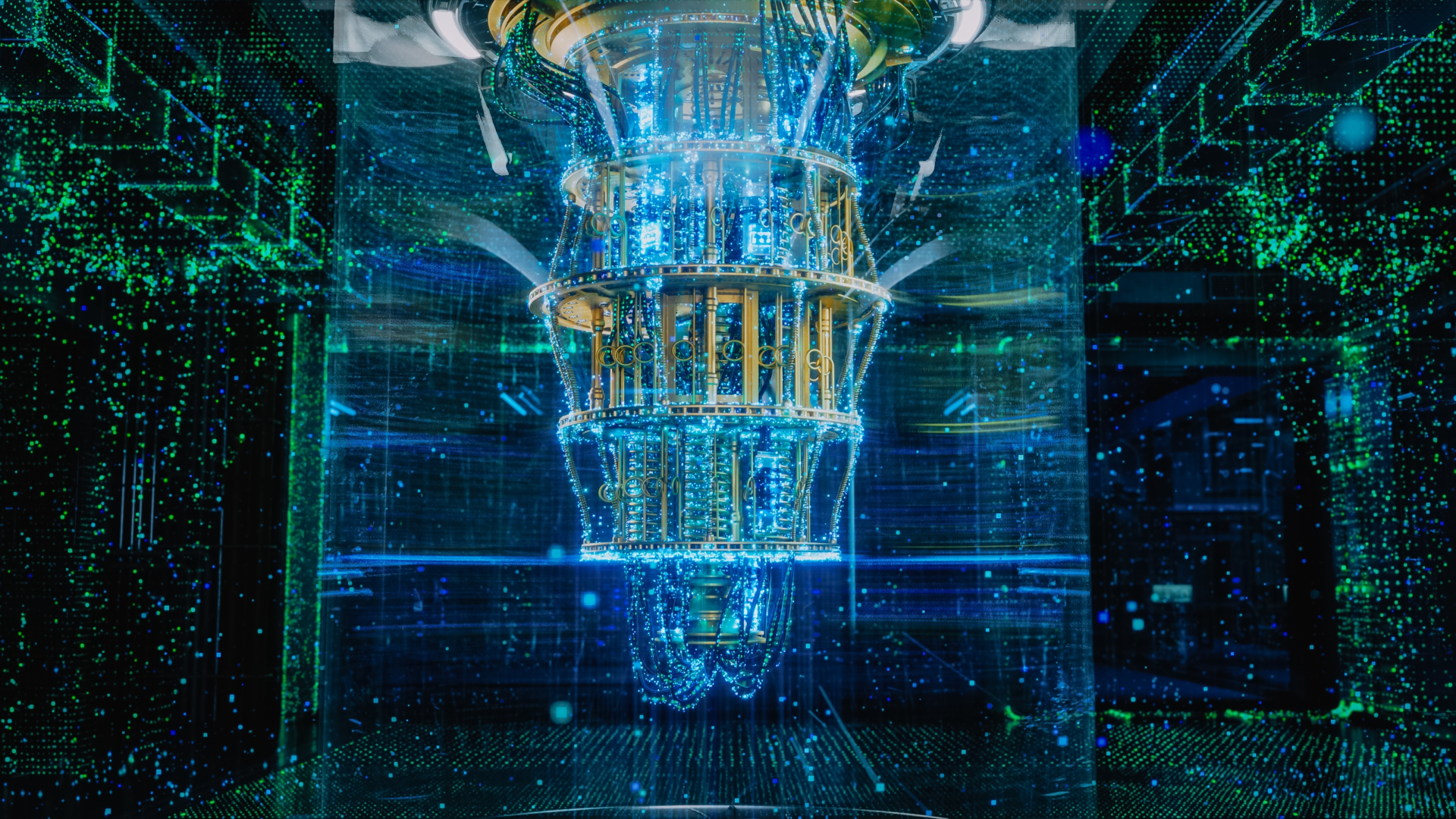
Quantum Computer
Solves all paths at once. Answer in an afternoon.
These are not the same technology. They require completely different hardware.
We’re talking about technologies that are leagues apart.
Which results in one absolute reality…
You cannot print a quantum processor in a traditional silicon AI foundry.
It is utterly impossible due to the laws of thermodynamics.
You can only shrink a silicon transistor so much before you reach the size of individual atoms.
Once you reach that subatomic scale, electrons begin to “leak” through the barriers in a disruptive physical process called quantum tunneling, rendering classical calculations useless.
Furthermore, traditional silicon chips — like the ones Nvidia designs and Taiwan Semiconductor Manufacturing Company prints — operate at room temperature or in standard liquid-cooled server racks.
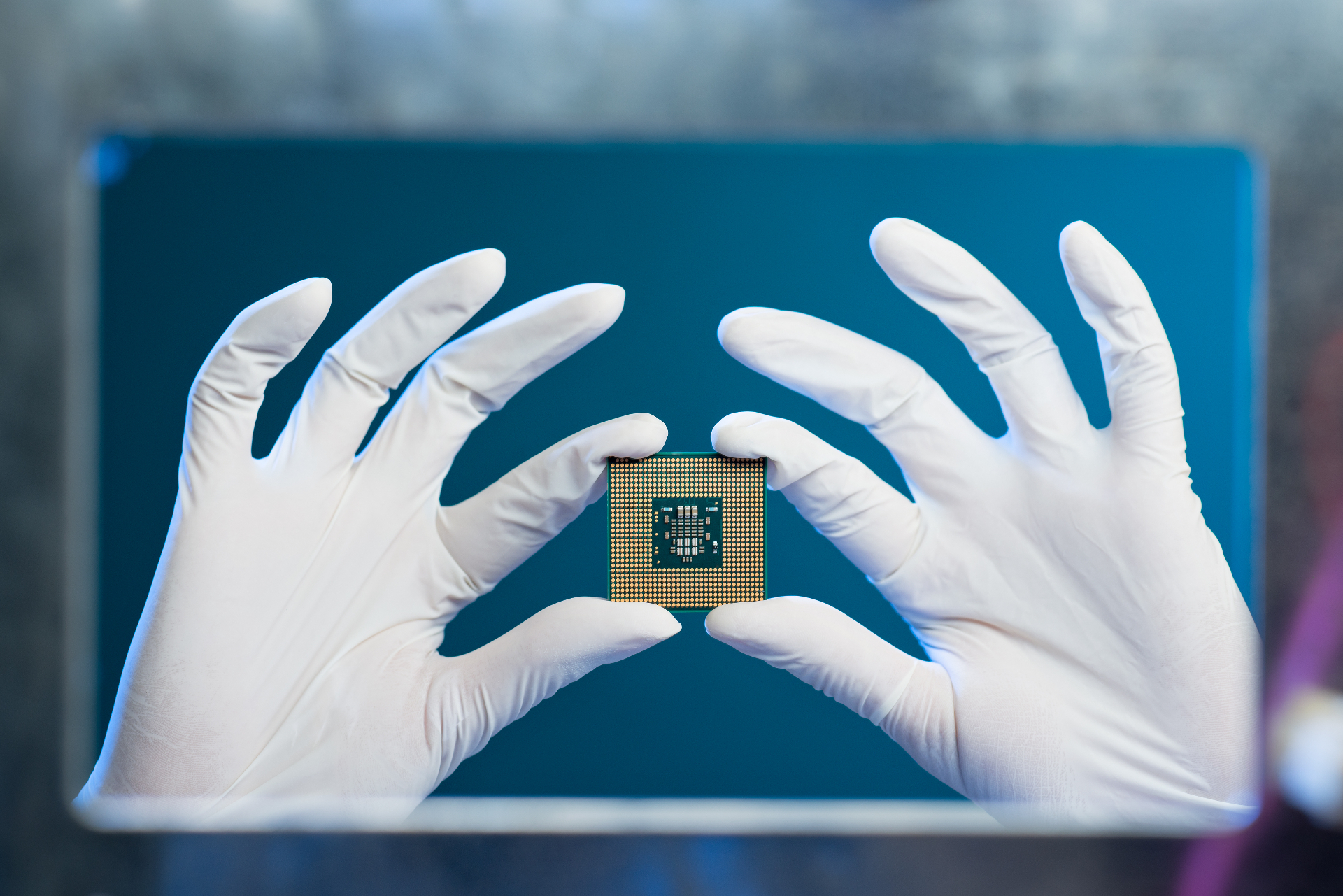
They are made by etching microscopic circuits into standard silicon wafers.
But quantum chips operate on entirely different branches of physics, requiring completely different materials.
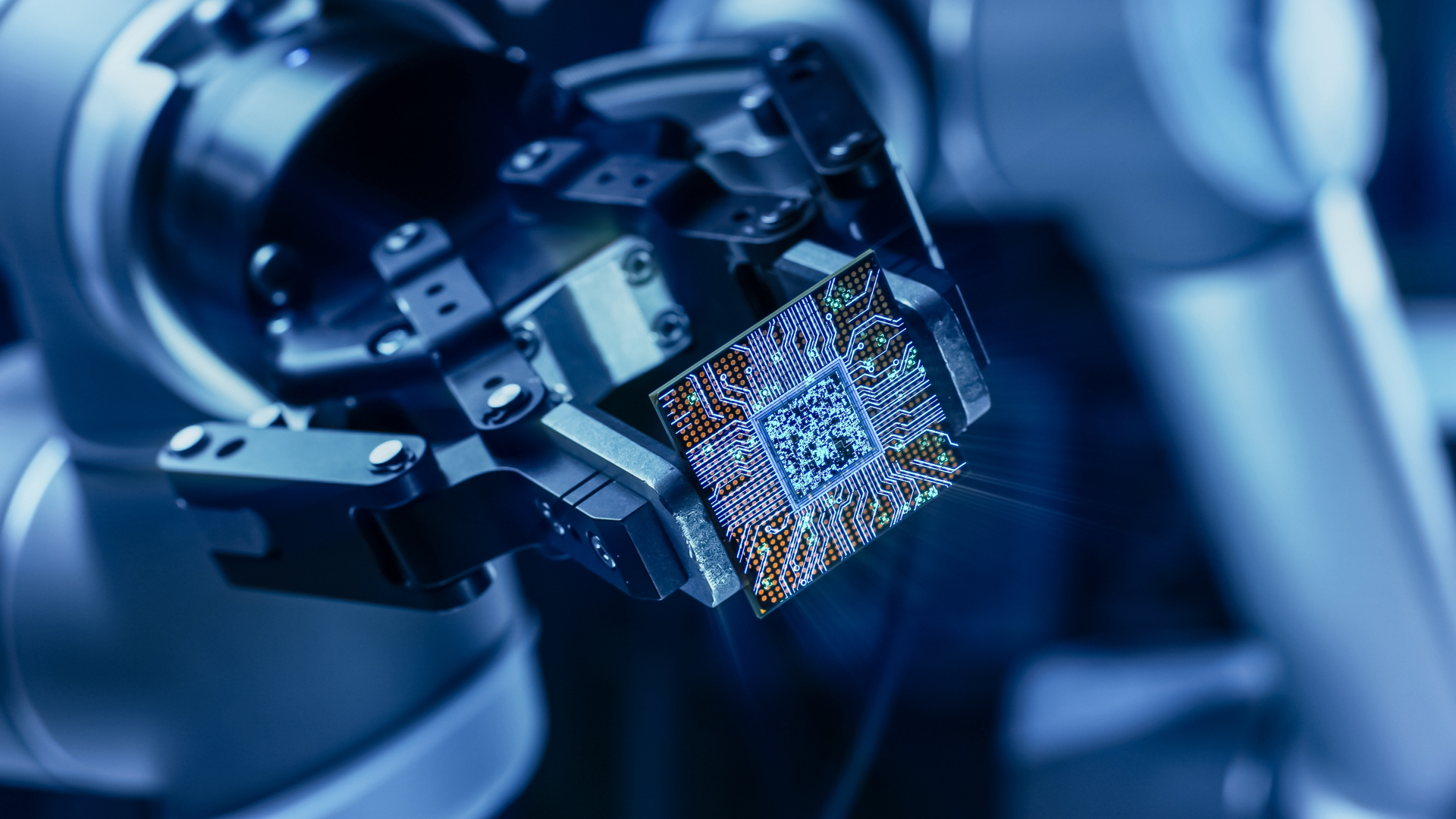
The most powerful, fastest quantum processors rely on “superconducting qubits.”
To maintain their delicate quantum state – what’s called “superposition” – these chips must be cooled in extreme-cryogenic dilution refrigerators to temperatures colder than the vacuum of deep space.
That is a fraction of a degree above absolute zero.
Cold enough to freeze the air in your lungs to solid stone before you could finish a single breath.
If you take a delicate, superconducting niobium qubit and try to run it through a standard, multi-billion-dollar silicon fabrication line like those owned by TSMC or Intel...
The intense heat, the chemical etching baths, and the standard lithography processes will destroy the quantum architecture instantly.
The coherence will shatter, and the chip will be entirely useless.
Quantum chips require an entirely different manufacturing supply chain.
They require specialized superconducting microwave wiring...
Complex, three-dimensional through-silicon vias (TSVs)...
Ultra-pure niobium, aluminum, or tantalum layers.
And extreme-vacuum, cryogenic fabrication processes that exist in only a handful of specialized foundries on the planet.
Not even Nvidia — the multi-trillion-dollar undisputed king of the classical AI revolution — manufactures a superconducting quantum chip in their standard facilities.
IBM, realizing they are behind in this race, is spending $1 billion just to try and build a dedicated quantum facility in New York.
Google is pouring billions into their quantum labs in Santa Barbara.
But exactly one independent U.S. firm already operates its own fully dedicated, integrated quantum device manufacturing facility on American soil.
A working, commercial production line humming in California right now…
Manufacturing quantum processors that operate at speeds up to 1,000 times faster than its rivals rely on.
Speed Advantage
1,000x
Faster gate speeds than competing quantum architectures
In the race against China, speed is survival.
In the cyber-race against China to reach Y2Q, speed is commercial survival.
And while giant Wall Street banks and Silicon Valley tech monopolies command multi-trillion-dollar valuations… this pure-play American quantum foundry trades on the Nasdaq for around $20 a share.
Let me be brutally honest:
Finding a fully operational, patent-protected hardware supplier trading at $20 right before a federally mandated infrastructure rollout… is the absolute Holy Grail of investing.
It is the exact setup that has minted tech millionaires time and time again.
And to prove just how valuable this $20 monopoly is about to become…
You only need to look at the greatest supply-chain wealth-creation story of the modern era.
The Anatomy of a 3,200% Hardware Monopoly
To understand how a $20 micro-cap stock could eventually hand you the same kind of 1,000%, 3,000%, or even 11,000% gains we’ve seen in past tech revolutions, here’s how global technology supply chain actually works:
The public believes that giant companies invent everything they sell.
Not true.
The most powerful tech companies on Earth depend on specialized “bottleneck” companies.
Let me show you:
Right now, the world is fighting over advanced AI chips.
That’s why Nvidia is a multi-trillion-dollar company.
But Nvidia can’t physically manufacture their most advanced chips.
They outsource the printing to a foundry in Taiwan called TSMC.
And TSMC can’t print the chips either… without hardware built by an obscure company in the Netherlands.

Decades ago, ASML developed a new way to print chips, called Extreme Ultraviolet (EUV) lithography.
Because it is so difficult to build, ASML secured a virtual monopoly on these machines.
If you want to build an advanced AI chip or a smartphone processor, you must use an ASML machine.
There is no alternative.
If you recognized this chokepoint early, you didn’t need to guess which smartphone would win.
You didn’t need to guess which AI chatbot would be the most popular.
You just bought the tollbooth.
Over the years, ASML’s stock rocketed from roughly $30 a share to over $1,000.
That is a life-changing 3,233% gain.
A $5,000 investment would have grown to over $166,000.
I am telling you the ASML story for a very reason.
The classical silicon era — the era of ASML and Nvidia — is hitting a wall that money can’t push through.
The Y2Q countdown is moving the frontier of high-end computing toward a different architecture altogether: superconducting quantum hardware.
And whoever designs, builds, and controls that hardware first will hold the high ground in the defining technology contest of the century.
A contest President Trump has just signed TWO new executive orders in a single day to accelerate America’s dominance in.
The ASML of the quantum age.
Just like ASML owned the monopoly on printing the last generation of chips…
One publicly traded, independent U.S. foundry is perfectly positioned to dominate the manufacturing of the next generation.
They hold the patents.
They own the fabrication facility.
But unlike ASML, which trades for $1,800 a share…
This quantum foundry is currently trading around $20.
ASML Today
$1,800
The chipmaking tollbooth of the silicon era
This Company Today
~$20
The chipmaking tollbooth of the quantum era
ASML surged 3,233% from its early days. This company is at the same starting line.
Past performance does not guarantee future results.
Imagine being able to go back in time and buy ASML at $30 a share before the entire world was forced to use their technology.
That is the setup staring you in the face today.
Invisible to the retail public…
Walking right into the largest federally mandated hardware upgrade in the history of the United States.
Let me show you.
The CNSA Mandate and the 8,400% Cybersecurity Precedent
To stop China and protect the banking grid, the U.S. government is not asking nicely.
They are forcing the market’s hand.
On August 13, 2024, the National Institute of Standards and Technology (NIST) dropped a regulatory hammer on the global technology sector.
They released the final versions of the first three Post-Quantum Cryptography standards: FIPS 203, FIPS 204, and FIPS 205.
To the average retail investor, those are just random acronyms.
To Jamie Dimon or a Fortune 500 Chief Information Security Officer, they are a legal and financial mandate.
These standards officially define the cryptographic algorithms that must be used to protect data against a quantum computer.
And the NSA has officially issued a directive —
The Commercial National Security Algorithm Suite 2.0 (CNSA 2.0) — requiring all National Security Systems to transition to these post-quantum algorithms by a hard deadline of 2030.
2030
Hard federal deadline for post-quantum cryptography transition
Non-compliant systems will be locked out of U.S. national security networks.
NSA CNSA 2.0 Directive / Executive Order, June 22, 2026
And just recently, on June 22nd, the President pressed even harder.
One of the two executive orders he signed accelerates the entire federal government's migration to post-quantum cryptography to 2031 — turning what had been a National Security Agency directive into a government-wide command issued from the Commander-in-Chief.
To a Fortune 500 defense contractor or a major U.S. bank moving trillions in federal funds, this is a legal and financial mandate.
If their systems are not quantum-secure, they will be legally negligent, non-compliant, and locked out of the U.S. system.
They have no choice.
Hundreds of billions of dollars are about to be forcibly rotated out of legacy cryptography and into quantum-resistant systems.
We have seen what happens to stock prices when the government forces this kind of mass digital compliance.
When the government began mandating sweeping changes to how corporate data was secured in the cloud over the last decade…
Corporations were forced to buy the pure-play hardware and software to comply.
They couldn’t build it themselves.
They had to pay the “tollbooth.”
Look at what happened to the pure-play security stocks that provided that mandatory compliance:
Palo Alto Networks soared more than 3,500%.
Fortinet skyrocketed an unbelievable 8,400%.
A simple $5,000 investment in Palo Alto Networks would have turned into $180,000.
A $5,000 investment in Fortinet would have exploded into over $420,000.
That is the raw power of a federally mandated upgrade.
When the government writes the law, Wall Street must write the checks.
But the compliance mandate is only the public half of the story.
The same government forcing that deadline is moving far more aggressively behind the scenes — racing to build sovereign quantum capability before its adversaries.
And putting federal money directly into the American hardware that race depends on.
The mandate is what Washington is forcing on everyone else.
The hardware is what it is buying for itself.
And because defense procurement cycles take three to five years to benchmark and install, that buildout has to begin in the current fiscal cycle.
The federal capital wave has already been triggered.
To understand how critical this foundry is to national survival, you have to look at what the Pentagon is doing.
The Defense Department’s Secret Standardization & The DARPA Audit
When national security is at stake, the Pentagon demands physical proof.
That is why DARPA launched the Quantum Benchmarking program.
DARPA brought in elite physicists to stress-test the hardware of the leading quantum companies.
They were looking for the architecture that could actually deliver a utility-scale, fault-tolerant quantum computer capable of defending against China’s cyber-army.
And this $20 California foundry didn’t just participate.
They were awarded a major research contract by DARPA to advance their superconducting architecture.
The U.S. military audited their hardware.
They looked at their 50-nanosecond gate speeds—which are up to 1,000 times faster than rivals.
And they wrote a check.
But the most critical piece of evidence dropped recently, and almost nobody in the financial press connected the dots.
The United States Air Force Research Laboratory awarded this company a multi-million dollar contract.
The Air Force did not pay them to simply build a faster calculator.
They paid them to advance “superconducting quantum networking.”
The defense agencies, the national labs, and allied governments are actively funding the exact technical bridge required to shoot quantum-encrypted data across vast distances.
The market simply hasn’t connected those checks to the Y2Q panic happening in the defense sector.
But the institutions have. And they are buying.
The Institutional Equity Tell & The “Walled Garden”
With hundreds of billions of dollars on the line, the smartest money in the world is not waiting for the Fortune 500 to start writing purchase orders.
They are positioning themselves right now.
And they are leaving a huge footprint.
Under the CHIPS and Science Act, the Department of Commerce is distributing billions of dollars to secure the American semiconductor supply chain.
But for the quantum sector, Washington didn’t just hand out research grants.
As a condition of those awards, the Commerce Department is set to take a minority, non-controlling equity stake in the recipients.
In the world of institutional tracking, this distinction is everything.
Grants tend to fund activity.
Equity stakes signal absolute conviction.
The federal government is positioning itself, structurally speaking, as a venture investor in the quantum computing sector — moving to take ownership in the companies it believes will define the quantum era.
In August 2025, the administration converted a portion of Intel’s CHIPS Act award into a 9.9% equity stake worth roughly $8.9 billion.
Today, that exact stake is reportedly worth approximately $36 billion.
It is one of the most profitable government investments in American industrial history.
Now, they are applying that exact same playbook to the quantum chokepoint.
The federal government signed a Letter of Intent for an award of up to $100 million for our $20 stock.
They already have an operational, dedicated superconducting fabrication facility humming in California.
They are already printing the chips.
They already secured a contract from the Air Force Research Laboratory.
This small California foundry is already shipping the sovereign quantum hardware the government’s national-security push is racing to lock down.
When the U.S. government decides a technology is critical to national survival, they do not play fair.
They put their thumb on the scale.
By moving to take an equity stake in this foundry under the CHIPS Act, the U.S. government is effectively making this company a strategic ward of the state.
They are establishing what government contractors call a “walled garden.”
Once the CHIPS Act capital fully clears and the walled garden is constructed, the government will begin aggressively steering future classified defense contracts exclusively toward the companies inside that garden.
They will freeze out foreign competitors.
They will sideline the slow-moving legacy giants.
They will crown the winner.
Right now, we are in the narrow window before the walled garden is sealed.
Elite Quantitative Hedge Funds like D.E. Shaw are actively doubling their positions inside this $20 stock.
They are getting inside before the gate closes.
Which is why I've just put the finishing touches on a new, special report I want to give you access to today.
Your Complete Quantum Blueprint
I've compiled all of this intelligence into a comprehensive, actionable research package.
It is designed to give you the exact same informational dominance as the quantitative hedge funds currently accumulating these shares.
When you accept a risk-free trial to my elite research advisory, Breakthrough Wealth, I will immediately send you three proprietary reports.
Report #1: America's Quantum Foundry: The #1 Stock to Own as the Y2Q War Ignites
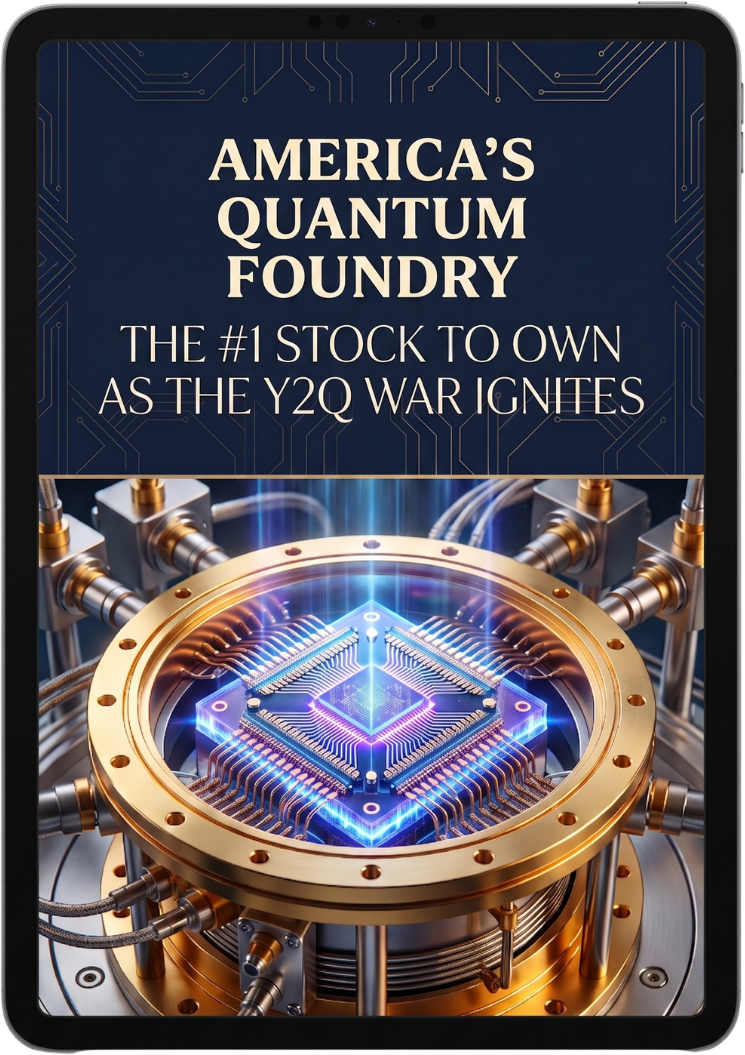
This is the crown jewel of my research.
Inside, I reveal the exact name, ticker symbol, and complete corporate profile of the $20 California superconducting foundry.
I give you the specific "buy-up-to" price to ensure you maximize your upside without chasing the market.
I detail the exact scaling roadmap, so you know exactly when the DARPA testing phases and CHIPS Act capital deployments will trigger earth shaking market reactions.
This is the ultimate physical chokepoint that could replicate the life-changing 1,000%, 3,000%, and 11,000% historical runs of past hardware monopolies like ASML, Fortinet, and Super Micro Computer.
But owning the foundry is only your offensive strategy. You also need a ruthless defense.
Report #2: The Decryption Hitlist: 5 Legacy Tech Stocks to Sell Immediately
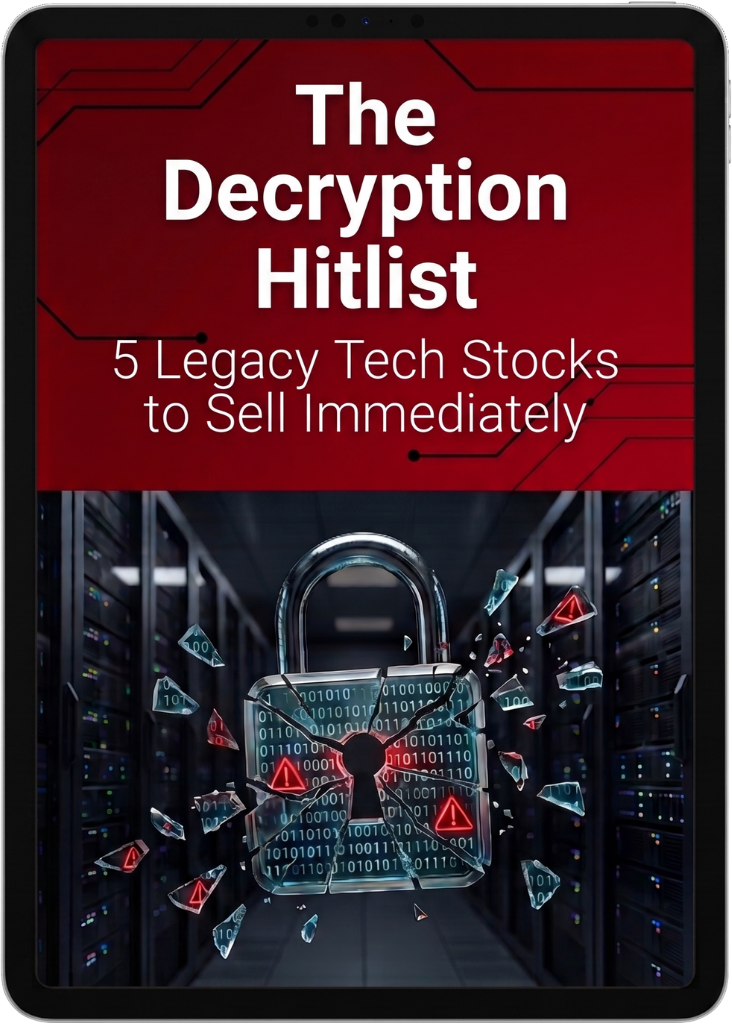
This report is your shield.
I reveal five household-name technology companies that are fatally exposed to the "Harvest Now, Decrypt Later" threat.
These companies are sitting on entirely legacy classical encryption architecture.
When the NSA's CNSA 2.0 mandates legally enforce the transition, these companies are going to lose their government contracts overnight.
The capital flight from these five stocks will be merciless.
Two of them are likely sitting in your 401(k) or index funds right now.
You must scrub them from your portfolio immediately before the broader market wakes up to their severe vulnerability.
Report #3: The Quantum Plumbers: The Stealth Connectivity Stock
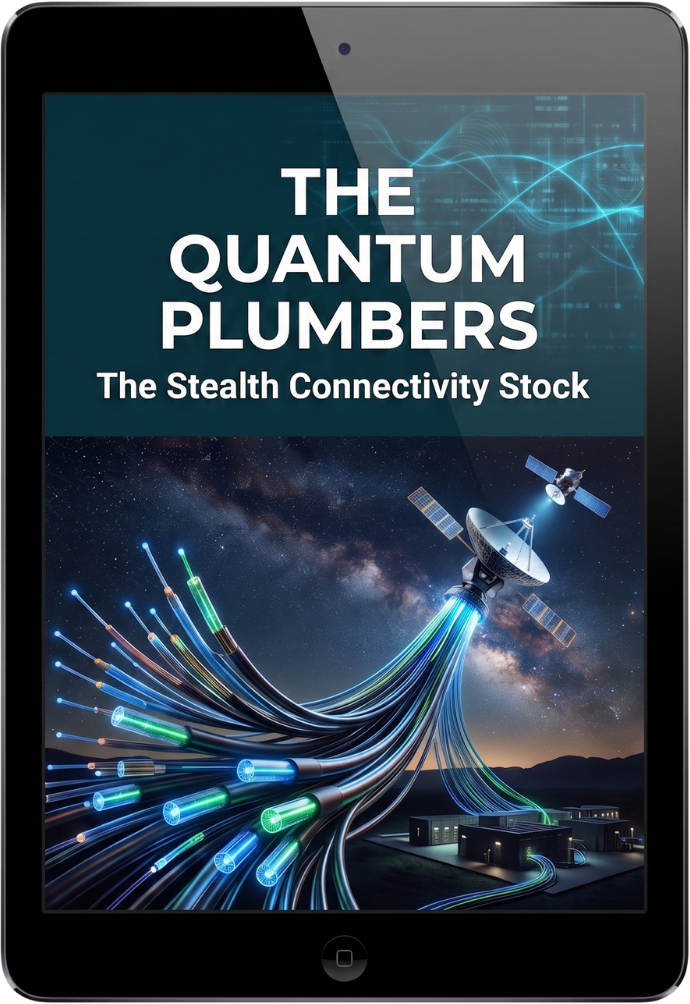
The post-quantum security grid cannot function on chips alone; it requires extreme-cryogenic optical networks to connect the nodes in space to the data centers on Earth.
Just as the "plumbers" of the classical AI boom handed early investors life changing gains, this stealth networking hardware company is positioned to ride the exact same wave of capital.
The Air Force Research Lab recently awarded them a critical, multi-million-dollar contract to develop superconducting quantum networking.
This report gives you the perfect, high-upside companion trade to amplify your quantum exposure.
The Invitation to Breakthrough Wealth

These proprietary reports, and the specific $20 ticker symbol inside them, are not available to the general public.
They will not be published on free financial blogs. They will not be debated by talking heads on cable television. They will not be handed out by your traditional wealth manager, who is likely still telling you to buy a diversified basket of index funds and wait thirty years for a meager return.
This level of research is reserved exclusively for members of my flagship investment research advisory, Breakthrough Wealth.
My mission with this advisory is incredibly simple, highly focused, and utterly ruthless: I tear down the informational wall between elite Wall Street institutions and Main Street investors.
I bypass the distracting, bloated mega-cap tech giants.
I do hundreds of hours of fundamental supply-chain research. I track the institutional capital flows. I locate the physical, unavoidable hardware chokepoint. And I deliver the absolute #1 pure-play stock in that supply chain to my readers every single month.
When you join Breakthrough Wealth today, you receive full, unrestricted access:
1. Twelve Monthly Issues of Breakthrough Wealth

This is my complete, ongoing, unredacted analysis of the global hardware wars, the defense industrial base, and the macro-economic shifts reshaping the globe.
Each month, I will send you a deep-dive, institutional-grade investigation into a new, completely overlooked market chokepoint before the mainstream media even knows it exists.
I will break down the patents, the physical supply-chain monopolies, the classified government contracts, and the exact entry prices.
2. The Live Model Portfolio
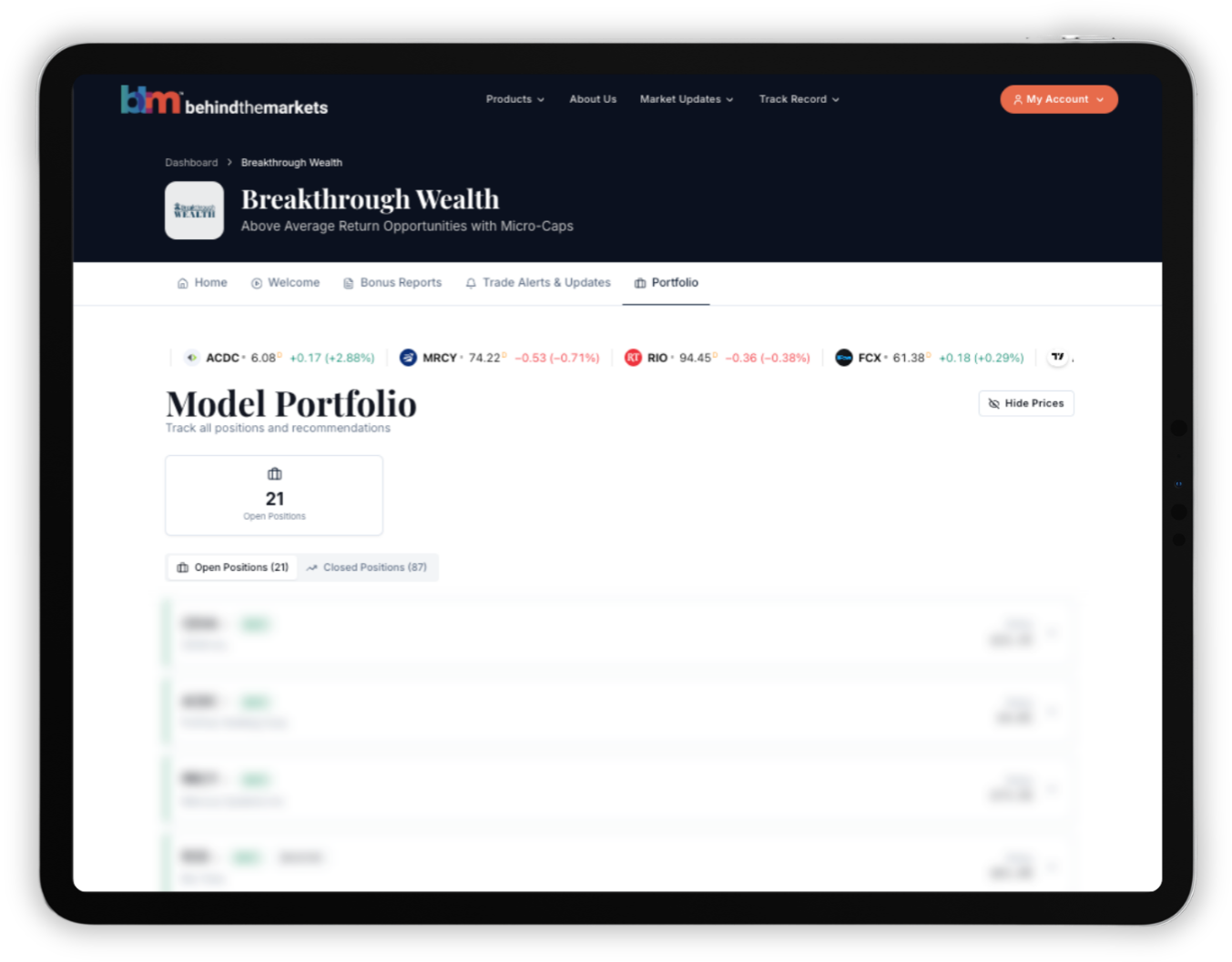
You get 24/7 access to my active, highly curated buy list. This is not a theoretical exercise; this is a live tracking dashboard complete with current market pricing, specific target sell dates, exact percentage returns, and strict "buy-up-to" guidelines to ensure you never overpay for an asset. You will see exactly where my absolute highest conviction lies at all times.
3. Urgent Flash Action Alerts
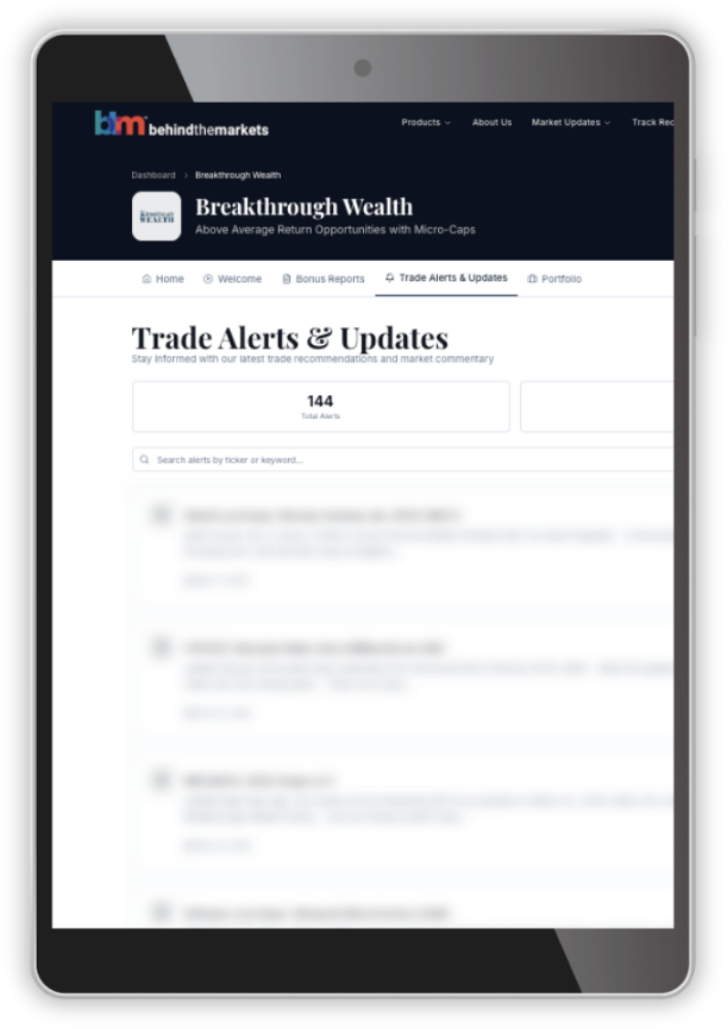
The stock market does not wait for a neat, predictable monthly publishing schedule.
When it is time to take profits off the table, or when an unforeseen government catalyst or defense contract drops unexpectedly, you will not be left in the dark.
You will receive an urgent, real-time email alert with step-by-step trading instructions telling you exactly what is happening, why it matters, and exactly what to do with your shares.
4. Your Y2Q Library
The moment you join, you will receive immediate digital access to all three special quantum reports:
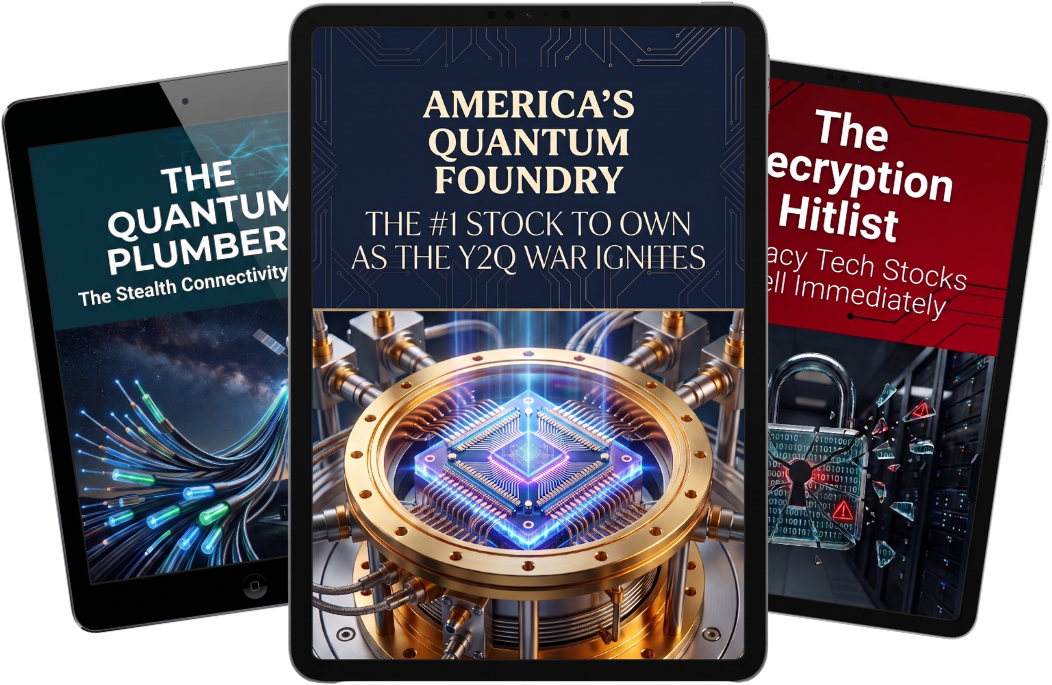
- America's Quantum Foundry: The #1 Stock to Own as the Y2Q War Ignites
- The Decryption Hitlist: 5 Legacy Tech Stocks to Sell Immediately
- The Quantum Plumbers: The Stealth Connectivity Stock
If you were a private family office or a boutique quantitative hedge fund, access to this kind of research would cost you tens of thousands of dollars.
The standard retail price for a one-year membership to Breakthrough Wealth is $2,997.
And based on the verified, documented historical performance of my recommendations — like tracing the AI supply chain to ARM Holdings before it tripled, tracking the data center demand to the hidden utility supplier Talen Energy, or finding the space-infrastructure chokepoint Rocket Lab before it surged nearly 4,000% — my publisher strongly believes $2,997 is an absolute, undeniable bargain.
But I am doing something special for readers today.
Because the U.S. government's multi-billion-dollar CHIPS Act capital deployment is happening right now...
Because the Chinese cyber-threat is actively inside our networks...
And because the buying window for this specific $20 quantum foundry is compressing as the Y2Q panic spreads across Wall Street...
If you act through this secure presentation today, you will not pay $2,997.
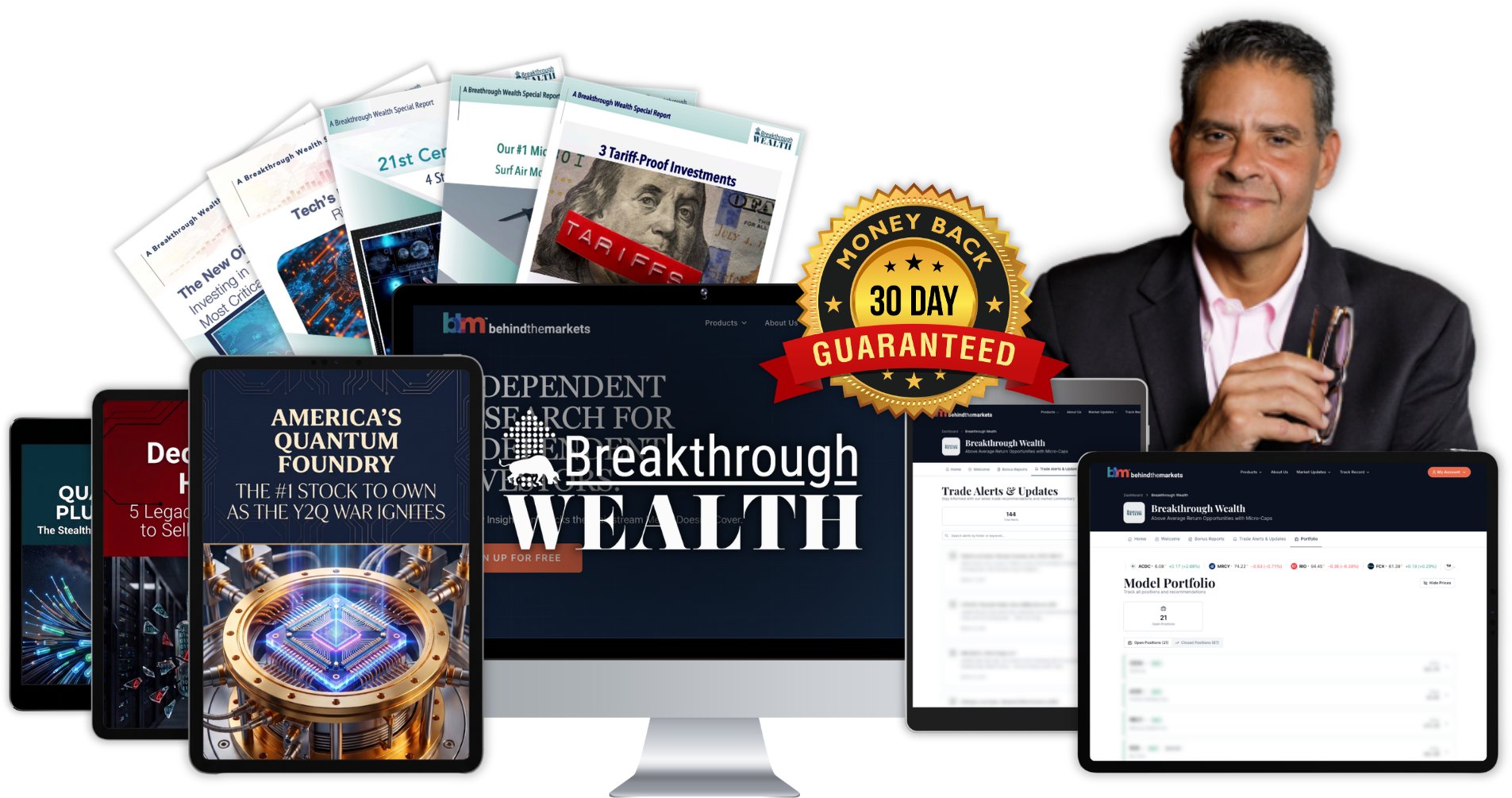
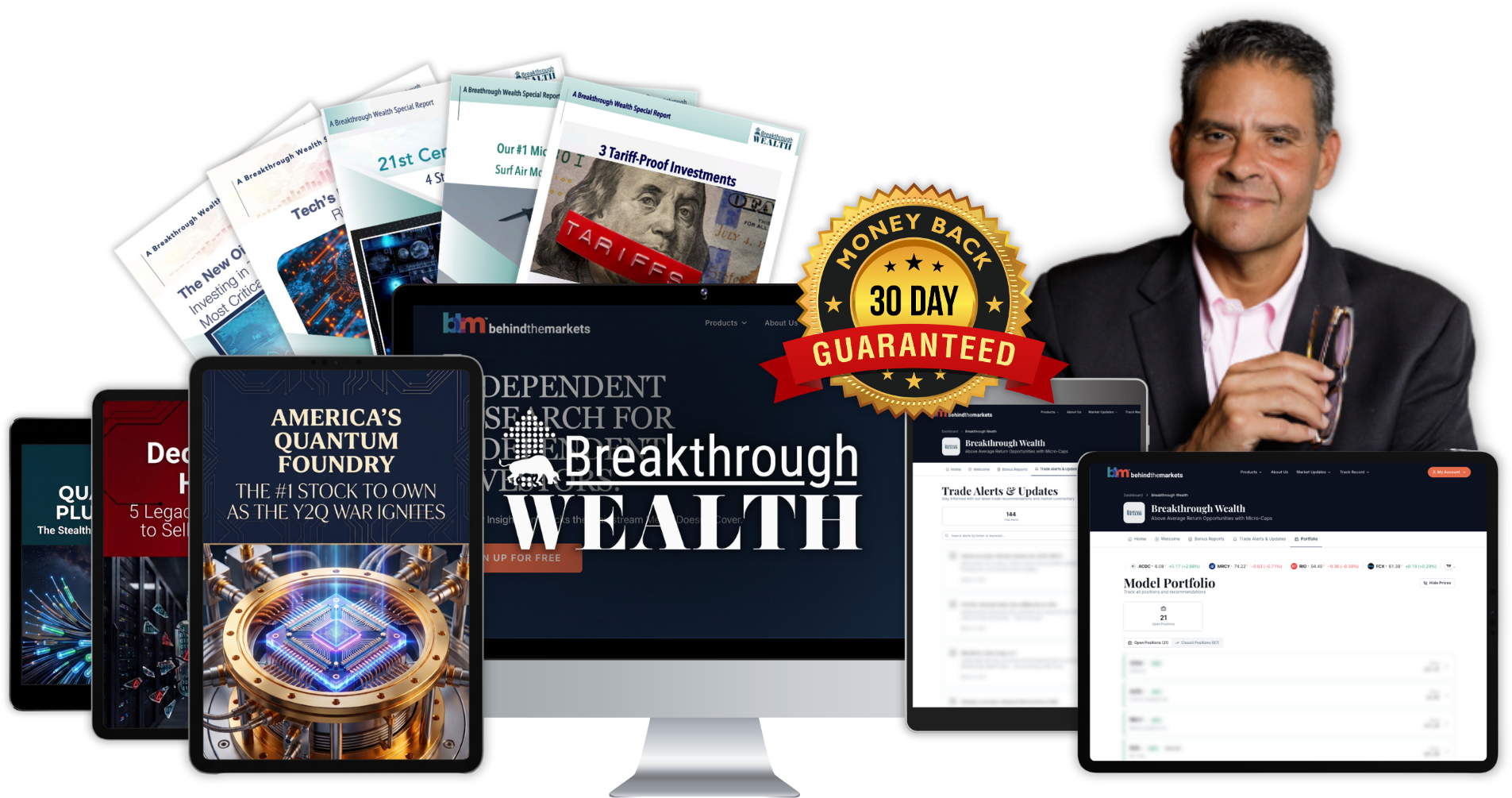
You will receive the three special reports, the elite portfolio, and a full year of Breakthrough Wealth—for just $1,997.
$2,997
$1,997
first year
That is less than the cost of a latte a day, you gain immediate access to the exact same caliber of specialized, deep-dive intelligence that moves institutional markets.
And I am backing that heavily discounted price with the absolute strongest, most transparent guarantee in the financial publishing industry.
My 30-Day, 100% Risk-Free Guarantee

I want you to be completely, unshakeably confident in this decision.
When you click the button below and pay your $1,997, you have a full thirty days to evaluate my research, my methodology, and my performance.
Download the reports immediately. Read the exact name and ticker symbol of the $20 California foundry.
Look up the DARPA benchmarking data and the Air Force networking contracts for yourself.
Track the daily performance of the stock against my exact "buy-up-to" guidelines. Read my monthly, deep-dive intelligence briefings.
If, at any point in the next 30 days, you feel my research is not delivering on every single promise I have made to you today — simply contact my U.S.-based customer service team.
We will issue a prompt, 100% refund of your subscription.
And you keep the special reports and bonus guide entirely free as my gift, just for giving my research a fair, honest trial.
 GET STARTED NOW
The 4 Questions Every Smart Investor Must Ask
If you have read this far, you recognize the sheer magnitude of the technological shift taking place.
You've seen the terrifying geopolitical threat of Y2Q and a Chinese cyber-invasion.
You've seen the legally binding CNSA 2.0 government mandates.
You've seen the historical multiples of 1,000%, 3,000%, and even 11,000% that are unlocked when you own the mandated pure-play supplier.
But if you are a highly disciplined, analytical investor—the exact caliber of reader I want inside my Breakthrough Wealth advisory — you should still have questions.
Here are the four biggest questions I imagine are on your mind... and the hard, factual answers that explain exactly why this $20 buying window is so uniquely lucrative.
Question #1: "If sovereign quantum hardware is this valuable, why doesn't a major bank or a big tech giant simply build its own quantum foundry and cut this $20 company out?"
This is the most common trap retail investors fall into.
They assume that unlimited corporate money can instantly buy unlimited physics.
It cannot.
You cannot simply convert a Wall Street software hub or an existing classical AI data center into a superconducting quantum foundry.
They require entirely different branches of physics, completely different supply chains, and highly specialized extreme-cryogenic materials.
To build a functioning, utility-scale quantum foundry from scratch, a major bank or tech giant would have to spend ten years and billions of dollars in trial-and-error just to bypass the physical moat this $20 company has already built.
They would have to recruit elite cryogenic physicists.
They would have to engineer proprietary extreme-vacuum fabrication machines.
And with the national-security clock ticking and the race against China already running, Washington does not have ten years to wait.
The government, the Pentagon, and the entire defense industrial base are forced by time and physics to rely on the independent merchant foundry that has already solved the thermodynamics and built the factory.
Question #2: "What about Google and IBM? They are spending billions of dollars on their own quantum research. Won't they just crush this $20 stock?"
You must understand the critical difference between building a closed, public software ecosystem and operating a sovereign, physical hardware foundry.
IBM and Google are building proprietary quantum mainframes.
They want to rent out access to their machines through their specific cloud services.
They are running the exact same business model they currently use for Google Cloud and AWS.
But that is not how the most sensitive corners of the U.S. government will run their quantum work.
The Pentagon and the NSA are not going to do their classified, national-security quantum computing on a commercial cloud they neither own nor fully control.
For sovereign capability, that is an unacceptable risk.
They need the machines themselves — physical quantum processing units (QPUs) sitting inside their own classified, air-gapped facilities, under their own roof.
This $20 California foundry is the only independent U.S. player actively manufacturing, selling, and physically installing superconducting quantum hardware directly to the end-user.
They already sell on-premises 9-qubit to 108-qubit quantum computing systems that support national laboratories.
Google and IBM are building cloud rental services. This foundry is selling the actual, physical hardware.
Question #3: "If this specific technology is so critical to U.S. national security, why hasn't a tech giant like Microsoft or Nvidia just bought the company outright?"
Because they can't. The United States government won't let them.
When a technology is deemed a matter of absolute, critical national security, the Department of Defense and federal antitrust regulators step in.
If a multi-trillion-dollar tech monopoly tried to buy the only independent, dedicated superconducting quantum foundry on American soil...
The U.S. government would block the acquisition immediately on national security grounds.
The Pentagon needs this foundry to remain an independent "merchant supplier" to the entire defense industrial base.
They cannot allow it to be locked inside the proprietary, walled ecosystem of a single tech giant.
And by signing a letter of intent to put up to $100 million into the company — and taking an equity stake as a condition of that award — the U.S. government effectively made this chokepoint un-buyable without Washington's blessing: a federal shield that works like a poison pill against any tech giant or foreign buyer hoping to swallow it whole.
This is designed to keep the foundry independent, in American hands, and out of reach of any foreign buyer or tech monopoly...
Cementing its position as the chokepoint everyone else has to pay to pass through.
Every major tech giant and defense prime will be forced to form a line and pay them for their hardware, rather than just absorbing them.
You get to own a piece of the tollbooth the rest of the market has to pay to cross.
Question #4: "I looked up the financial metrics for the quantum computing sector. The current revenue numbers are tiny. Is this just another pre-revenue startup burning cash?"
I am going to be brutally honest with you: The current, publicly reported revenue of this foundry is small.
To a basic algorithmic stock screener that only looks for current trailing revenue, this stock looks like a tiny, unproven company.
Amateur investors see the low revenue, they see the $20 share price, and they ignore it.
But the smartest money on Earth does not buy trailing revenue.
They buy the infrastructure roadmap.
In 2010, Tesla was trading in the single digits (split-adjusted).
The mainstream Wall Street analysts called it a zero because they weren't selling enough cars yet.
But the smart money saw the physical Gigafactory being built.
Right now, elite quantitative hedge funds and the U.S. Commerce Department are not buying this foundry for its current revenue.
They are buying the chokepoint.
They are taking their positions before the U.S. government legally forces hundreds of billions of dollars in enterprise cybersecurity spending to violently rotate into this exact hardware.
Furthermore, remember Quanta Computer—the Taiwanese manufacturing giant?
They recently poured $35 million of their own corporate capital into this exact company.
And they didn't buy at a discount.
They bought at a premium to the market price strictly to secure their strategic partnership.
By the time this $20 stock shows a quarterly revenue spike from government procurement contracts and Wall Street purchase orders, the stock will not be $20.
It could be $80, $150, or well over $200.
You are buying the $20 price tag because the multi-billion-dollar government contracts are actively being written right now, but the cash influx hasn't hit the public quarterly earnings report yet.
If you wait for the revenue to finally show up on CNBC, you will have missed the 1,000% multiplier effect entirely.
The Final Choice
Every single decade, a technological shift of this sheer magnitude creates a hard, unforgiving dividing line in the stock market.
You can choose to stand on the wrong side of that line.
You can choose to ignore the SEC filings, the classified DARPA defense contracts, and the chilling congressional testimonies from the FBI Director.
You can choose to blindly buy the multi-trillion-dollar tech and banking giants, hoping that a company already valued at $3 trillion can somehow defy the laws of mathematics and hand you a life-changing multiple.
Or worse, you can choose to ignore the terrifying Y2Q threat entirely, leaving your portfolio fatally exposed to the Chinese "Harvest Now, Decrypt Later" intelligence leaks and the impending $100 Trillion Cyber Pearl Harbor.
But if you are ready to stand on the right side of the line...
If you are ready to own the invisible, physical layer of hardware at the center of America's race for sovereign quantum capability — the hardware the Pentagon, the defense industrial base, and the U.S. Commerce Department are moving to secure...
If you want to position your portfolio for the exact same 1,000%, 3,000%, and 11,000% historical multiples that consistently come from owning the exact hardware chokepoint right before a legally binding government mandate drops...
Click the button below to secure your copy of the special report.
You will be taken to our secure, 256-bit encrypted checkout page. The very moment your $1,997 is processed, the reports will be emailed directly to your inbox.
You can have the exact name and ticker symbol of the American quantum foundry in your hands in less than two minutes.
The digital vault is opening. Make sure you are inside.
 GET STARTED NOW